Staying in your Comox Valley home as you get older: the changes that make it easier.
Most people who want to stay in their home don't need it rebuilt. They need a few things fixed: the steps at the front door, a doorway that's too tight, a stair that needs a second rail, a bathroom or kitchen that's become awkward. We build those changes in Courtenay, Comox, and Cumberland, one at a time, each with its own written quote.
What is aging in place?
Aging in place is living in your own home, or at least your own community, as you get older, rather than moving into a care setting. That's how the federal, provincial and territorial Report on housing needs of seniors describes it, and it's how most older Canadians live: 93.2% of seniors were in private homes at the 2016 Census, according to the same report.
It matters here more than in most places. In the Comox Valley Regional District, 20,585 of the 72,445 people counted, or 28.4%, were 65 or older, and the average age was 47.4, according to the Statistics Canada 2021 Census Profile for the Comox Valley .
In practical terms, a house that suits aging in place is one where the daily routes stay easy: in and out the door, room to room, up and down the stairs, and around the bathroom and kitchen.
What changes make a home easier to age in?
The work usually lands in five parts of the house. Every change is quoted separately, so you can begin with whatever is causing the most trouble and come back for the rest later, or not at all.
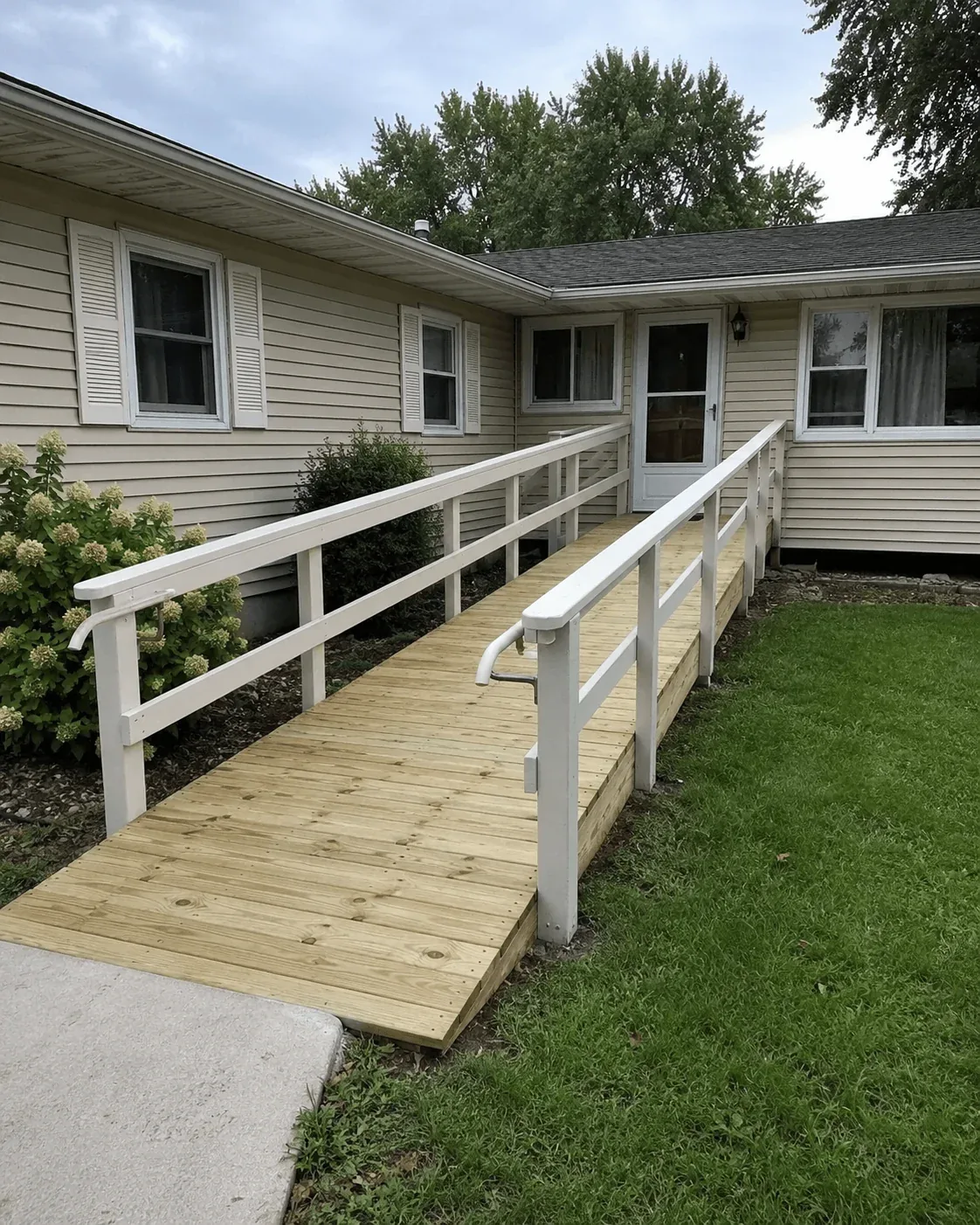
Front steps and entries
Wood or composite ramps, small threshold ramps, and fixes for steep steps or a walkway that's settled at the door. More on wheelchair ramps and entry and walkway access.
Doorways and doors
Doorways opened up wide enough for a walker or wheelchair, and lever handles where round knobs have become hard to turn. More on door widening and lever handles and door hardware.
Stairs and halls
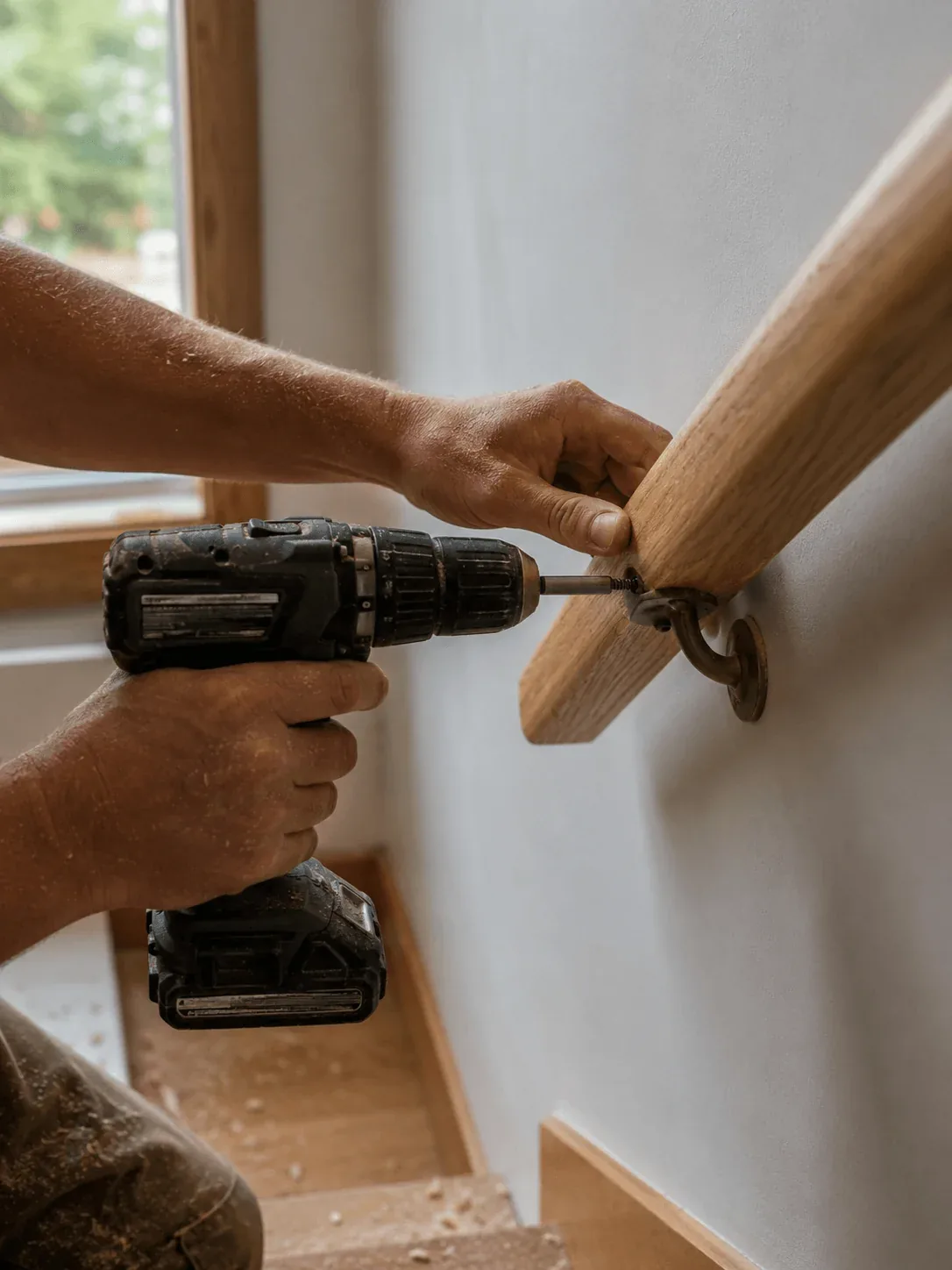
A handrail on both sides of the stair, rails along a hallway, and non-slip treads on the steps. More on handrails and stair treads.
Bathrooms
Lower thresholds, non-slip flooring, blocking inside the walls, and grab bars, fitted into the bathroom you have now. More on bathroom accessibility.
Kitchens
Pull-out drawers, pull-down shelves, and similar retrofits built into the cabinets you already own. More on kitchen accessibility.
Home modifications or a full renovation: which do you need?
For most people, modifications. A modification fixes one obstacle and leaves the rest of the room alone. A renovation takes the room back to the studs and rebuilds it, which brings in plumbing, electrical, and tile work. The first is usually enough to keep a home working well as you get older.
| Home modifications | Full renovation | |
|---|---|---|
| How much changes | One doorway, rail, threshold, or cabinet at a time | The room is stripped and rebuilt |
| Who does the work | A carpenter | Several trades, including plumbing, electrical, and tile |
| Typical examples | Ramps, wider doorways, handrails, grab bars, lower thresholds, pull-out shelves | New layouts, moved fixtures, new cabinets and countertops |
| How it's done | In stages, as the need comes up | As one larger project |
Thinking about something bigger for a room? Bring it up at the site visit and we'll go over it with you. And if cost is part of the question, our page on help paying for the work explains the BC Housing rebate, the two tax credits, and what has to happen before work begins.
Common questions
Questions about aging in place in the Comox Valley.
How much does it cost to make a home ready for aging in place in the Comox Valley?
There's no package price, because every home needs something different. A new lever handle on one door and a ramp at the front entry are completely different jobs. We look at the home, then quote each change in writing, and the site visit and quote are free. Call 250-650-0595 to set one up.
Does aging in place mean remodeling the whole house?
Rarely. The things that make a house harder to live in later on tend to be specific: steps up to the door, a doorway too narrow for a walker, a staircase with one rail or none, cabinets that are hard to reach. Each one can be fixed by itself while the rest of the room stays as it is.
Is it better to make changes now or wait until they're needed?
Both are reasonable, and it's your decision. Doing a few changes early, like a second handrail or lever handles, means the work happens on your timeline. Waiting is fine too. The main difference is that a sudden need, such as coming home after a hospital stay, leaves less time to plan.
Can accessibility changes look like part of the house?
Yes. A wood or composite ramp can be built to suit the house, a wood handrail can be finished to sit with the existing trim, and lever handles and grab bars are made in the same finishes as ordinary door and bath hardware. Done well, most of it looks like regular carpentry rather than equipment.
What about plumbing, electrical, or heating changes?
That work is handled by licensed trades: a licensed plumber, electrician, or HVAC contractor. If any of it is part of what you have in mind, mention it when you call, and we'll talk it through alongside the carpentry, such as framing and blocking behind a wall or changes to a threshold.
Can aging-in-place changes be reversed later?
Most of them. Handrails and grab bars can come down and the holes be filled, lever handles can go back to knobs, and a wood ramp can be dismantled. A widened doorway or a lowered threshold stays, since it becomes part of the house. Your written quote notes which changes are permanent.
Who can tell us which changes make sense for us?
An occupational therapist, who looks at how someone gets around the home and suggests what would help. Ask your doctor for a referral, or contact Island Health's North Island community access line at 250-331-8570 or 1-866-928-4988. We don't do assessments. We build what you and your care team settle on.
Can I get financial help with aging-in-place changes in BC?
Possibly. BC Housing's BC RAHA rebate covers part of the cost for eligible lower- and moderate-income households, and federal and BC tax credits give back a share of eligible costs to people 65 or older or living with a disability. Some programs must approve the work before it starts, so check first.
Important: Comox Valley Home Access provides construction and access improvements only. We install client-requested fixtures and modifications. Responsibility for healthcare and regulatory decisions remains with the homeowner and their care providers.